
Neal Weiss knows excellence when he hears it. And for more than two decades he’s been happy to share it.
Despite humble beginnings and economic setbacks, Weiss has defied the skeptics by becoming the founder and president of one of America’s foremost jazz record labels. Twenty-two years after its debut release, Whaling City Sound (WCS) is continually finding itself at the top of the national jazz radio charts, amassing a resume of world-class talent and fulfilling Weiss’s goal of being on a par with the giant labels of the jazz world.
It’s a beautiful summer afternoon in downtown New Bedford and Weiss sits in the cozy, air-conditioned loft of the Fiber Optic Center, a high-tech company he started in 1992. In his hand he holds a sheet of paper with the rankings of the most popular albums on the national jazz radio charts. With his easy but sturdy demeanor he points to the Number One position on the paper – the album “Magic Dance: The Music of Kenny Barron,” by Greg Abate on Weiss’s WSC label. And while it is certainly impressive that one of his artists is in the top ranking, it becomes even more incredible that the album has been at Number One for seven consecutive weeks, followed by two weeks at Number Two.
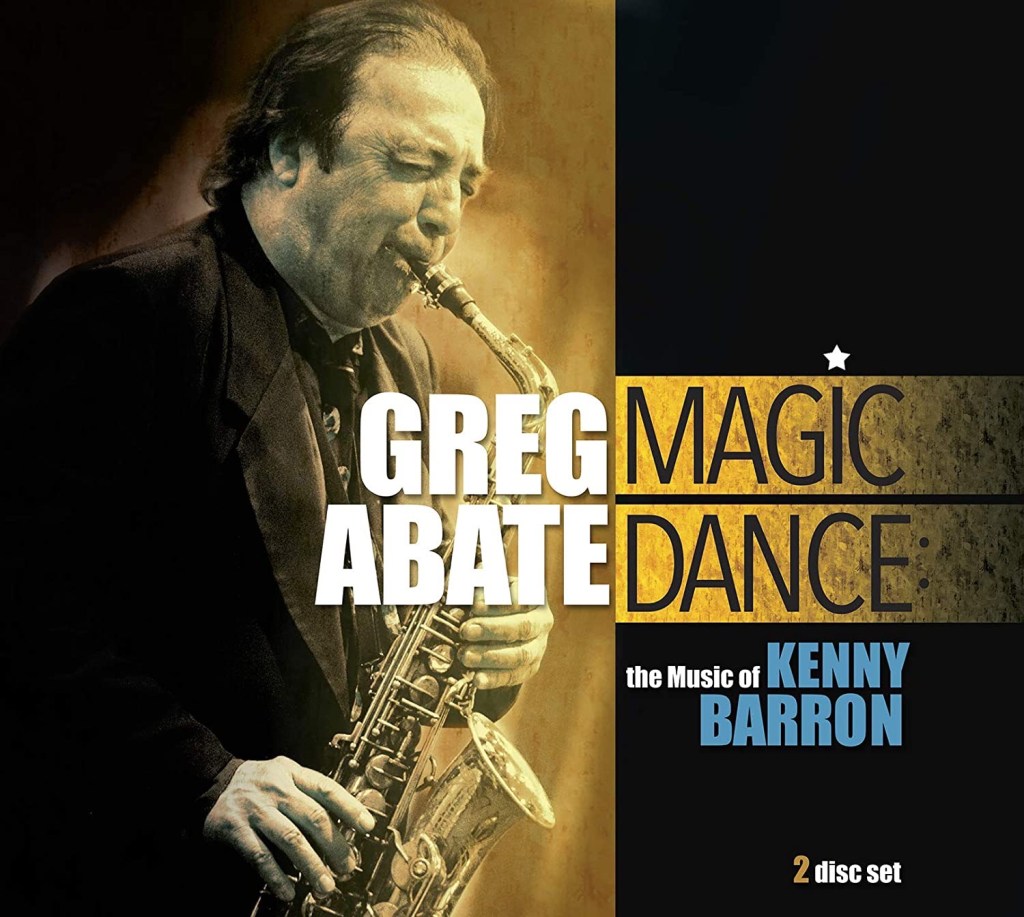
But Abate’s success with “Magic Dance…” is only one more jewel in the WCS crown. It is the seventh record from the label to reach Number One, while numerous others have madethe Top 10.
When Weiss began WCS in 1999, he did so with the mission of bringing the large amount of unrecognized jazz talent in the region to a larger and more deserving audience, hence the name Whaling City Sound. With confidence in the artists of the area, he told those around him that his sights were focused on matching or surpassing the success of the “Big three” jazz labels – Sony, Verve, and Blue Note. To many it seemed like a long shot, but Weiss’s vision would be realized and his legacy secured, all the while building a reputation as an uncommonly benevolent steward of his stable of artists.
“Neal has had success because he has a great love of music, he feels it with a passion,” says Westport’s Marcelle Gauvin, who was the vocalist on WCS’s first release, “Faces of Love.” “He has supported the work of people who would have been successful locally and given them the opportunity to have a national or international audience.”
“Neal trusts the vision of the artist,” says John Harrison, a highly-regarded pianist and Dartmouth resident who has appeared on eight WCS recordings, including Gauvin’s debut and with his own trio for the album “Roman Sun.” “Artists really like that Neal is going to give them the opportunity to do what they want with their project.”
Dino Govoni is a Dartmouth resident and has been a professor at the Berklee School of Music in Boston for 25 years. The saxophone player has appeared on numerous WCS albums and will be releasing his third record for Weiss, “Hiding In Plain Sight,” this fall.
“Neal is very generous with his artists, both in his time and finances,” Govoni says. “He has good public relations, and can get your music played on radio around the country. From a financial perspective he helps artists get their projects off the ground and out there to an audience that would’ve probably never heard them otherwise. He gives musicians an avenue to new audiences beyond the people who like us locally.”
“Neal has advanced the careers of many musicians in this demographic,” Harrison says. “Now artists of very high caliber are coming to him with the hope of gaining greater recognition.”
“The aim was always to be national,” Weiss says. “But it was to take local artists like John Harrison and make them known. Eventually word got around and people started coming to me, and artists on the label want to continue with the label.”
By the end of this summer the WCS catalog will boastmore than 130 releases. Weiss estimates that the budget for each WCS release usually tops off at over $20,000. As he currentlyexperiences a swell of recognition it is unfortunate for those who strive to be a part of his roster – Weiss’s itinerary is back logged well into next year, with one record released per month. Weiss is particularly excited about the upcoming Gerry Gibbs’ recording, “Songs From My Father,” an album that includes the last known recording by jazz giant Chick Corea. Gibbs has already landed four Number One albums on the national jazz radio charts with WCS. In addition to Gerry Gibbs and Abate, WCS also had radio chart-toppers with pianist Greg Murphy, and vibraphonist Terry Gibbs, Gerry Gibbs’s father. Abate was born in Fall River and was raised in Woonsocket, RI. Guitarist John Stein of Tiverton, Rhode Island notched a Number Two album on the jazz radio charts in 2010 with “Raising The Roof.”
This season WCS is scheduled to release records by Dave Zinno Unisphere (“Fettish”), Shawnn Monteiro (“You Are There”) and Eric Wyatt (“A Song of Hope”).
“Neal has a great respect for musicians,” Gauvin says. “He takes the time to get to know his artists and researches them. He produces the people he loves and that shines through.”
Weiss recalls his interest in music beginning around the age of 11, listening to 78 RPM records with his older brother Fred in their hometown of Elmont, New York on Long Island, 20 miles outside of downtown Manhattan. He initially enjoyed doo wop, Elvis, and Little Richard, but eventually was introduced to jazz listening to late night New York dee jay Symphony Sid. While he was captured by the album “Moanin’” by Art Blakey, he was riveted by the music of Ray Charles.
“Ray Charles was my Michael Jackson,” Weiss recalls. “I was a fanatic. He was mixing gospel music with blues, making pop music out of sacred music. By my early teens I had become a jazz nut.”
Weiss was particularly inspired by the Charles’ album “Genius After Hours,” which would lead him to explore the genre more deeply and discover “purer, non-commercial” jazz such as Miles Davis, John Coltrane, and Horace Silver.
“It was very bluesy and rhythmic,” he says. “There was a love of life, an elation.”
And Weiss’s personal elation would continue to grow. When he had found success with the Fiber Optic Center he became comfortable with launching the label. Over the years the economy would ebb and flow and there were periods where the people around him were advising him to forgo the label. He would have to cut back on the amount of records he was releasing but he would never relinquish his passion forproviding great music.
Today the WCS catalog runs the stylistic gamut of the jazz genre, including swing, be-bop, post-bop, free jazz, blues, and something Weiss refers to as “fractured funk.” The label has alsoforayed into folk, rock, and classical. Weiss expanded his roster to nationally-known artists in 2004 with the Joe Beck Quartet’s “Live in Biel, Switzerland.” Eventually WCS would boast recordings that included jazz mammoths such as Kenny Barron, Ron Carter, Dave Liebman, Jerry Bergonzi, and George Garzone. Among Weiss’s most treasured WCS releases are those which feature his “musical heroes,” Clark Terry, Phil Woods, and Terry Gibbs.
“I’ll release anything that I think is of high quality,” Weiss says. “I have four requirements for everything I put out – virtuosic performances, excellent compositions, a great recording, and great packaging.”
And while Weiss has been a champion for music being made in the South Coast, he says that the area isn’t entirely unique.
“I believe that every area has every kind of music,” he says. “Depending on the ethnicity of the population some areas will have more than others. You just have to look for it.”
As Weiss eases into his retirement years he estimates that he will begin curtailing his output of records. But he has confidence in what he has contributed to both the region and the national jazz community.
“Something that’s always stuck with me is someone very knowledgeable saying to me early on ‘Neal, you’re going to have a lot of fun doing this but don’t ever expect anyone to play your stuff on the radio.’”
“Neal’s always in your corner,” Govoni says. “If he feels strongly about you and has faith in what you do he’ll stay behind you, and that’s great.”
 Sonic SouthCoast